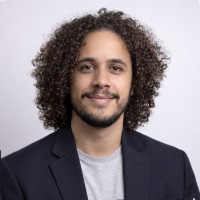
About Me
I am a mathematician and physicist with a deep interest in nonlinear dynamics, complex systems, and machine learning. My academic path has taken me from a rigorous mathematical foundation to cutting-edge research in computational physics, always at the intersection of theory and computation.
Education
I studied Mathematics at the University of Havana (2013–2017), earning a Bachelor's degree. The program provided a broad and solid training in pure and applied mathematics, covering analysis, algebra, topology, probability, and mathematical physics. My undergraduate thesis explored the Minority Game through the lens of information theory.
I then pursued a Master's degree in Mathematical Sciences at the same university (2017–2020), specializing in Probability and Statistics. My coursework included stochastic processes, advanced probability theory, and dynamical systems. The master's thesis focused on nonlinear dynamics — specifically synchronization in coupled oscillator systems and bifurcation structures in circle maps.
I am currently completing my PhD at the Max Planck Institute for the Physics of Complex Systems in Dresden, Germany, under the supervision of Holger Kantz in the Nonlinear Dynamics and Time Series Analysis group. My research focuses on reservoir computing for short-term forecasting of chaotic dynamical systems, combining ideas from recurrent neural networks, dynamical systems theory, and time-series analysis.
Technical Skills
Programming is central to my work and something I genuinely enjoy. Python is my primary language, and I am highly proficient in the scientific and machine learning ecosystem: PyTorch, JAX, TensorFlow, Keras, Scikit-Learn, NumPy, SciPy, Pandas, and Matplotlib. I also work with Julia for high-performance numerical computing and have some experience with Rust.
Beyond scientific computing, I am comfortable with modern software engineering practices: version control with Git, CI/CD pipelines with GitHub Actions, containerization with Docker, and package publishing on PyPI. I have developed and maintain my own open-source Python library, ResDAG, for reservoir computing with directed acyclic graph architectures.
Research Interests
My research sits at the crossroads of nonlinear dynamics, machine learning, and time-series analysis. I am particularly interested in how recurrent neural network architectures can be understood and improved through the lens of dynamical systems theory. More broadly, I am drawn to problems where rigorous mathematics meets practical computation: chaotic forecasting, network topology, stochastic processes, and the design of principled machine learning methods.
Education
PhD in Physics
Max Planck Institute for The Physics of Complex Systems · Machine Learning for prediction of Chaotic Temporal Dynamics
2021 – Present
Short-term forecasting of chaotic dynamical systems using reservoir computing (Echo State Networks). The thesis introduces quantitative methods for transient analysis, novel evaluation metrics for chaotic prediction, and topology-aware reservoir architectures, with contributions including the dendrocycle topology, the Expected Forecast Horizon metric, and a geometric time-discretization scheme based on the sagitta.
Masters in Mathematical Sciences
Universidad de La Habana
2018 – 2020
Analysis of synchronization and bifurcation phenomena in two nonlinear dynamical models: a system of coupled nonlinear oscillators and the circle map, with a focus on the structure of Arnold tongues and the transition between mode-locked and quasiperiodic regimes.
Bachelor in Mathematics
Universidad de La Habana
2013 – 2017
Analysis of the Minority Game using information-theoretic tools. The thesis investigated how individual agent parameters influence the global payoff of the system, applying concepts from information theory to characterize the collective dynamics emerging from simple strategic interactions.